


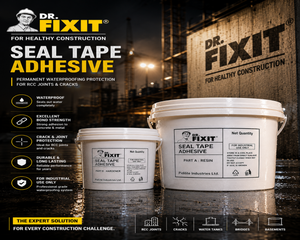
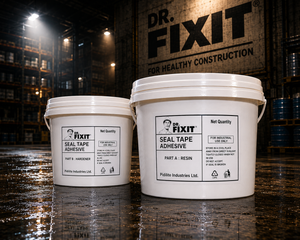
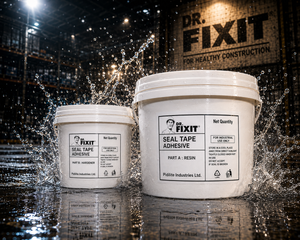
Dr. Fixit Tape Adhesive — Waterproofing Tape & Membrane Bonding Adhesive (6 kg)
Price includes shipping & handling charges
Excluding taxes.
Price includes transportation & handling charges.
Return within 15 days of purchase. Duties & taxes are non-refundable.
Guaranteed Safe Checkout
Dr. Fixit Tape Adhesive — Waterproofing Tape & Membrane Bonding Adhesive (6 kg)
A waterproofing system is only as strong as its weakest bond. You can apply the best waterproofing chemicals on the market, use the right tape at every joint and corner, and still end up with roof leakage or wall seepage if the tape isn't properly adhered to the substrate underneath. That's the specific problem Dr. Fixit Tape Adhesive solves — and it's a problem that gets overlooked far more often than it should on site.
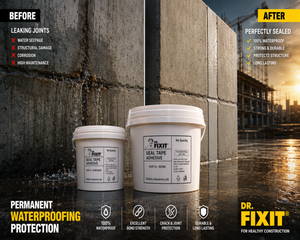
Dr. Fixit Tape Adhesive is a specially formulated bonding adhesive from Dr. Fixit Waterproofing Solutions, designed to firmly bond waterproofing tapes, joint sealing strips, and bituminous membranes to concrete, masonry, and structural surfaces before the main waterproofing solution is applied over the top. Think of it as the step that makes everything else in your waterproofing system stick — literally. When waterproofing contractors skip this step or use a generic adhesive, the tape shifts, the bond weakens, and the joint that was supposed to be sealed becomes the exact point where water finds its way through.
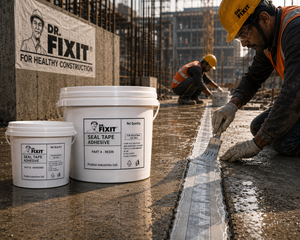
Applied by brush directly onto the prepared substrate, it creates a tacky, durable bonding surface that holds waterproofing tapes and sealing strips firmly in place through the entire application process — and long after. It's compatible with Dr. Fixit's range of waterproofing tapes and membranes, making it the natural companion product for any joint treatment or membrane-based waterproofing solution on roof waterproofing, terrace waterproofing, or below-grade applications.
It's not a glamorous product. Nobody specifies it on a project and gets recognition for it. But experienced waterproofing contractors who've dealt with callbacks and failed joints know exactly why it matters — because the construction chemical that holds everything together doesn't get noticed until it's missing.